Living in a tiny house means making smart decisions about every square foot. And there’s no decision more central to your daily comfort than choosing the right tiny house composting toilet system. For countless tiny house enthusiasts embracing off-grid life, composting toilets have become the go-to solution. But here’s the thing: they’re not just about being eco-friendly. They’re about freedom, practicality, and breaking away from traditional plumbing constraints.
You’re about to discover everything you need to know about composting toilets for tiny houses. We’ll explore how they work, why they’re perfect for small spaces, and which models deserve your attention.
What Makes Composting Toilets Perfect for Tiny Houses?
Think about traditional flush toilets for a moment. They guzzle 1.6 to 7 gallons of water per flush. That’s not just wasteful; in a tiny house, it’s impractical. Composting toilets flip this script entirely. They use zero water and transform human waste into nutrient-rich compost through natural decomposition. Waterless Toilet Shop
Here’s what makes them game-changers for tiny living:
Water Conservation at Its Finest.
Every flush from a traditional toilet sends precious water down the drain. In a tiny house where every resource counts, composting toilets eliminate water use entirely. You’re saving thousands of gallons yearly—water you can use for drinking, cooking, and bathing.
No Plumbing Required.
Traditional bathrooms demand complex plumbing systems, sewer connections, and septic tanks. Composting toilets? They’re self-contained. You can place them anywhere in your tiny house. Move to a new location? Your toilet moves with you.
Environmental Responsibility:
The finished compost becomes valuable soil amendment. You’re not just disposing of waste—you’re creating something useful. Plus, you’re reducing strain on water treatment facilities and protecting local waterways from contamination. Tiny House Plans
Cost Savings Over Time
Skip the septic system installation. Forget monthly water bills for flushing. Composting toilets require minimal maintenance. The initial investment pays for itself through reduced utility costs and avoided plumbing expenses.
Understanding How Composting Toilets Actually Work
The science behind composting toilets is elegant in its simplicity. Aerobic bacteria break down waste naturally, just like in a garden compost pile. But there’s more nuance here than you might expect.
The Composting Process
Waste enters the toilet and gets mixed with carbon-rich materials like sawdust, coconut coir, or peat moss. These “bulking agents” create air pockets for oxygen circulation. Aerobic bacteria thrive in this oxygen-rich environment, consuming waste and producing heat as a byproduct. This heat accelerates decomposition and evaporates excess moisture.
Urine Separation Systems
Many modern composting toilets separate liquid and solid waste. Why? Urine adds excessive moisture that can throw off the composting balance. Separating it prevents odors and speeds up the composting process. The collected urine can be diluted and used as garden fertilizer—it’s rich in nitrogen. Compo Closet
Ventilation: The Odor Control Secret
Proper ventilation is non-negotiable. A vent pipe (typically 4 inches in diameter) runs from the toilet through your roof or wall. Some systems use small electric fans to create negative pressure, drawing air down through the toilet bowl and exhausting odors outside. The constant airflow keeps your bathroom smelling fresh. Off Grid Dwellings
Temperature and Moisture Balance
Effective composting needs the right temperature (60-80°F) and moisture level (40-60%). Too wet? Add more bulking material. Too dry? The process slows down. Modern systems make these adjustments straightforward.
Types of Composting Toilets for Tiny Houses
Not all composting toilets are created equal. Your living situation, budget, and comfort preferences will guide your choice.
Self-Contained Systems
These all-in-one units handle everything in the toilet itself. The composting chamber sits directly beneath the toilet seat. Perfect for tiny houses where space is at a premium. You’ll empty the finished compost every few weeks to months, depending on usage.
Pros:
Easy installation, portable, affordable
Cons:
Smaller capacity, more frequent emptying
Central Composting Systems
These split systems have the toilet upstairs and the composting chamber below (typically in a basement or outdoor location). Waste travels through a pipe to the larger composting unit. Better for permanent tiny house installations.
Pros:
Larger capacity, less frequent maintenance
Cons:
More expensive, requires more space, complex installation
Bucket-Style Composting Toilets
The simplest option. A bucket with a toilet seat lid. Line it with compostable bags, add bulking material after each use, and empty regularly. These DIY-friendly systems cost under $100 to build. Hipcamp
Pros:
Ultra-affordable, easy to build, portable
Cons:
Frequent emptying, more hands-on maintenance
Installation and Setup: What You Need to Know
Setting up a composting toilet isn’t rocket science, but doing it right matters. Here’s your roadmap.
Location Selection
Choose a spot with access to an exterior wall for ventilation. You’ll need to run a vent pipe outside. Some systems require electrical outlets for ventilation fans. Leave enough clearance around the toilet for comfortable use and maintenance access.
Ventilation Installation
This is your most crucial step. Run a 4-inch vent pipe from the toilet through your roof or wall. The pipe should extend above your roofline to ensure odors disperse properly. Install a vent fan if your model requires one (most do). Seal all connections to prevent leaks. Shop Tiny Houses
Electrical Needs
Many composting toilets need electricity for ventilation fans. Some high-end models also power heating elements or agitators. Plan your electrical routing during installation. Off-grid? Solar panels can easily power these low-wattage fans.
Regulations and Permits
Here’s where things get murky. Regulations vary wildly by state, county, and municipality. Some areas embrace composting toilets with open arms. Others require permits, NSF/ANSI Standard 41 certification, or health department approval. Check your local building codes before purchase. Waterless Toilet Shop
Initial Setup
Start by adding your chosen bulking material to the composting chamber. Follow manufacturer guidelines for quantities. Connect ventilation. Test the fan. Add more bulking material after first use. Monitor the system during the first week to ensure proper operation.
Maintenance: Keeping Your Composting Toilet Running Smoothly
Composting toilets need attention, but not as much as you might fear. Stick to these routines for trouble-free operation.
Daily Maintenance
Add bulking material after each solid waste deposit. A simple scoop of sawdust or coconut coir does the trick. Wipe down the toilet seat and bowl with a vinegar-water solution (5:1 ratio). This eco-friendly cleaner prevents bacteria buildup without harming the composting process. Compo Closet
Weekly Tasks
Clean the pedestal, seat, lid, and bowl interior thoroughly. Empty the urine container (if your system has one). Rinse it with white vinegar to prevent urine scale buildup—never use plain water, which reacts with residual urine to create scaling. Stoke Loaf Van
Monthly Checks
Inspect the ventilation system. Clean the fan blades. Check for obstructions in the vent pipe. Monitor the compost level in the solids container. Rotate or agitate the compost if your system has that feature.
Emptying the Compost
Frequency depends on usage. Single person? Every 4-6 weeks. Full-time couple? Every 2-3 weeks. Wear gloves. Remove the solids container. Empty into a secondary composting bin or directly into your garden compost. The material should look and smell like rich, earthy soil.
Troubleshooting Common Issues
Odors? Check ventilation and add more bulking material. Too wet? Increase bulking material amounts. Fruit flies? Empty more frequently and ensure proper ventilation. Urine container smells? Add white vinegar between empties.
The Best Bucket Composting Toilets: Our Top Picks
Ready to choose your composting toilet? Here are five excellent options spanning different budgets and feature sets.
1. Modiwell Dry Flush Toilet – Waterless, Odorless, Self‑Contained

The Modiwell Dry Flush Toilet is a premium, fully self-contained solution for RVs, vans, boats, tiny houses, and off-grid setups that want zero plumbing and zero mess. It uses an automatic sealing system and coagulant to lock waste and odors in disposable bags, supports up to 350 lbs with stainless steel legs, and runs on a rechargeable 5200 mAh battery that delivers roughly 70–100 uses per charge, making it ideal for longer boondocking trips. Its compact 17″ x 17″ footprint and 17 lb weight make it surprisingly portable for such a high-tech, waterless system.
2. LECARDIO Composting Toilet with Heating Plate & Urine Separation

This LECARDIO composting toilet is designed as a true in-unit composter for tiny houses, vans, and boats, using a microbial blend, mixing shaft, and heating plate to break down solids directly in the toilet. It includes automatic electric mixing when the lid closes, a built-in exhaust fan to vent odors outdoors, and a urine-separating design that sends liquids to a rear container for cleaner day-to-day use. At a full-size 32″ x 16″ x 20″ with floor-mounted installation, it’s best suited for semi-permanent setups where users want low-odor, low-maintenance, waterless operation with serious eco credentials.
3. Clirass 5.8‑Gallon Portable Toilet – Flushable, Leak‑Proof, Compact

The Clirass 5.8‑gallon portable toilet is a practical, mid-priced option for camping, RVs, boats, and emergency use, combining a proper freshwater flush with a generous waste tank. It features a 5.8‑gallon waste tank, 3.2‑gallon fresh water tank, a sealed slide valve, and a rotating spout for splash-free emptying, plus a fill-level indicator so you know when it’s time to dump. With a 440 lb load capacity, compact 16.3″ x 14.4″ x 16.5″ body, and upgraded T-type 360° flush system, it’s a solid choice for families wanting a familiar, flush-style portable toilet without relying on campground facilities.
4. TROBOLO WandaGO Composting Toilet (Urine‑Diverting Portable Unit)
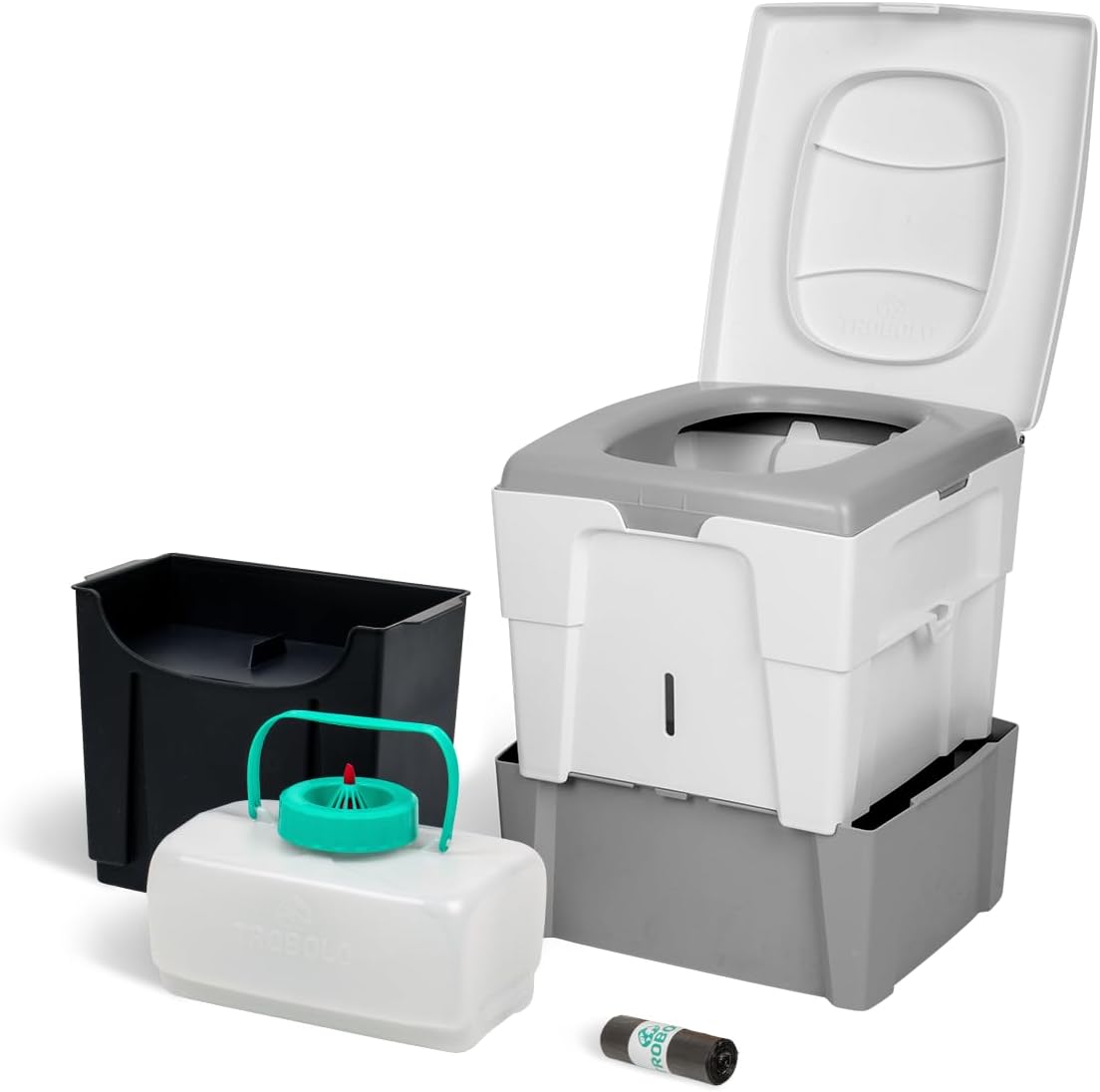
The TROBOLO WandaGO is a clever portable composting toilet that uses urine-diverting technology to reduce odors and make waste handling easier in vans, tents, and tiny setups. Its compact box design hides a separating insert that keeps liquids and solids apart, and the adjustable height allows adults and kids to sit comfortably while still saving space. With no water, power, or complex installation needed, it suits campers who want a more sustainable, low-odor alternative to chemical portables but still need something light and easy to move.
5. PLAYBERG Portable Travel Toilet (Bucket‑Style with Case)

The PLAYBERG portable travel toilet is a simple, bucket-style unit that focuses on low cost and easy transport rather than built-in flushing or composting. It uses standard waste bags under a toilet-style seat and lid, comes with a carry case, and offers a lightweight, grab-and-go solution for car camping, hunting blinds, roadside emergencies, or minimalist van setups. If you mainly need an emergency or occasional-use toilet that packs away quickly, this is an affordable, no-frills option that pairs well with gel or powder absorbents for odor control.
DIY Bucket Toilet: Building Your Own for Under $100
Not ready to invest in a commercial system? Build your own bucket composting toilet. You’ll need about 45 minutes and basic tools.
Materials Needed:
- 5-gallon bucket with lid ($5-10)
- Standard toilet seat ($15-25)
- Plywood or cedar boards for box construction ($20-40)
- Wood screws and hinges ($10)
- Sawdust, coconut coir, or peat moss for bulking ($10-20)
- Optional: urine diverter kit ($50-80)
Building Steps:
- Construct a box slightly larger than your bucket (if desired)
- Cut a hole in the top for the toilet seat
- Attach the toilet seat securely
- Place the bucket inside
- Add bulking material to the bucket
- Line with compostable bags (optional)
Usage Tips: Keep a container of bulking material nearby. Add a generous scoop after each use. Empty when 2/3 full (about weekly for two people). Dispose of waste in a secondary compost pile or designated composting area. HomeBiogas
Real-World Costs: What You’ll Actually Spend
Let’s talk numbers. Composting toilets range from dirt-cheap DIY builds to premium systems.
Budget Tier ($50-200): DIY bucket systems, basic portable models. Perfect for weekend cabins or testing the waters before committing.
Mid-Range ($200-800): Self-contained composting toilets with urine diversion, ventilation fans, and decent capacity. The sweet spot for most tiny house owners.
Premium ($800-3,000+): High-capacity systems, electric composting units, central systems with remote chambers. For permanent installations and luxury tiny homes.
Ongoing Costs:
- Bulking material: $10-30 monthly
- Compostable bags (if used): $10-20 monthly
- Ventilation fan electricity: $1-3 monthly
- Replacement parts: minimal
Compare this to traditional flush toilets: septic system installation ($3,000-10,000), monthly water bills ($30-100), periodic pumping ($300-500 every 3-5 years), and you’ll see why composting toilets make financial sense.
Legal Considerations: Regulations You Need to Know
Here’s the reality: regulations are all over the map. Some jurisdictions welcome composting toilets enthusiastically. Others treat them like foreign invaders.
NSF/ANSI Standard 41
This certification demonstrates a composting toilet meets rigorous health and safety standards. Many jurisdictions require NSF/ANSI 41 certification for legal installation. Check if your chosen model carries this certification. Waterless Toilet Shop
State and County Variations
Oregon and Washington? Generally composting toilet-friendly. California? Depends on your county. Texas? Most areas allow them with proper permits. New York? Highly variable by locality. Always check with your local building department and health department before installation. Off Grid Dwellings
Permit Requirements
Some areas require building permits for composting toilet installation. Others need health department approval. A few require inspection after installation. Budget time and money for the permitting process.
Composting and Disposal Regulations
Even where composting toilets are legal, compost disposal may face restrictions. Some areas prohibit using humanure on food crops. Others require secondary composting periods. Research local regulations for finished compost disposal.
Common Concerns Addressed
Let’s tackle the elephant in the bathroom. You’ve got questions, and here are straight answers.
“Don’t They Smell Terrible?”
Properly maintained composting toilets smell like earth or nothing at all. The key is adequate ventilation and sufficient bulking material. Skip these basics? Yes, you’ll have odor issues. Follow guidelines? Your bathroom stays fresh. Compo Closet
“Isn’t It Gross to Handle Waste?”
Finished compost looks and feels like garden soil. You’re not dealing with raw sewage. Most people find the process less unpleasant than emptying a traditional septic tank or unclogging a toilet. Wear gloves if it makes you comfortable.
“What About Guests?”
Some guests adapt instantly. Others need gentle guidance. Keep clear instructions posted. Most visitors find composting toilets easier to use than expected. The “ick factor” is mostly in people’s heads, not reality.
“Can They Handle Toilet Paper?”
Yes, but with caveats. Use minimal amounts of single-ply, unbleached paper. Some people keep a separate waste bin for paper to reduce solids volume. Experiment to find what works for your system.
“What About Diarrhea or Illness?”
Composting toilets handle liquid waste just fine. Add extra bulking material to absorb excess moisture. The composting process eliminates most pathogens, though you may want to compost for longer periods after illness. Nature Loo
Environmental Impact: The Bigger Picture
Composting toilets aren’t just good for your tiny house; they’re good for the planet.
Water Savings
The average American uses 27 gallons of water daily for toilet flushing. That’s nearly 10,000 gallons yearly per person. Composting toilets reduce this to zero. In water-scarce regions, this isn’t just eco-friendly—it’s responsible.
Nutrient Recycling Human waste contains valuable nitrogen, phosphorus, and potassium. Traditional sewage treatment destroys or dilutes these nutrients. Composting returns them to the soil, closing the nutrient loop.
Reduced Infrastructure Strain
Fewer people using conventional sewage systems means less strain on water treatment facilities. You’re reducing energy consumption for pumping and treating wastewater. Every composting toilet lightens the collective burden.
Carbon Footprint Reduction
Composting produces far less greenhouse gas than wastewater treatment. You’re eliminating methane production from anaerobic sewage digestion. The finished compost sequesters carbon in soil.
Making Your Decision: Is a Composting Toilet Right for You?
Composting toilets aren’t for everyone. Here’s how to decide.
You’re a Good Candidate If:
- You’re building or living in a tiny house
- You value environmental sustainability
- You’re comfortable with hands-on maintenance
- You want off-grid capability
- You’re willing to adapt to a new system
Think Twice If:
- You’re squeamish about waste handling
- You want truly zero maintenance
- Local regulations prohibit composting toilets
- You can’t install proper ventilation
- You’re not ready for daily bulking material additions
The Bottom Line
Composting toilets free you from plumbing constraints, save water, and reduce environmental impact. They require more engagement than conventional toilets but reward you with independence and sustainability. For tiny house living, they’re often not just the best option; they’re the only practical option.
Getting Started: Your Next Steps
Ready to embrace composting toilet life? Here’s your action plan.
- Research Local Regulations
Contact your building department and health department. Ask specifically about composting toilet requirements. Get everything in writing. - Choose Your System
Match your budget, space, and comfort level. Start with our recommended models above or explore local options. - Plan Your Installation
Identify toilet location. Map ventilation routing. Check electrical requirements. Measure twice, install once. - Stock Up on Supplies
Buy bulking material in bulk. Set up storage near your toilet. Stock cleaning supplies (vinegar, spray bottles, gloves). - Educate Yourself
Read your toilet’s manual thoroughly. Join online communities for tips and troubleshooting. Don’t skip the learning curve. - Commit to Maintenance
Set reminders for regular tasks. Keep a maintenance log. Stay consistent with daily bulking material additions.
Final Thoughts
Living in a tiny house means rethinking everything we take for granted. Composting toilets embody this shift perfectly. They challenge our assumptions about waste, convenience, and our relationship with natural cycles. Yes, they require adjustment. Yes, they need maintenance. But they deliver something invaluable: freedom from the constraints of traditional plumbing and the satisfaction of living more lightly on the earth.
The tiny house movement is about intentional living. Composting toilets fit that philosophy perfectly. They’re not just waste management systems; they’re statements about the kind of life you want to live. A life that’s simpler, more sustainable, and remarkably free.
Your tiny house adventure starts with bold choices. Choosing a composting toilet? That’s one of the boldest and best decisions you’ll make.